

Pet Hair
Removal
Professional pet hair removal for car interiors that a vacuum alone can't fix — because pet hair doesn't just sit on the surface. It works its way in.
As part of our full car detailing service across Westchester and Fairfield County, light pet hair is addressed as part of our interior services. Heavy embedded pet hair requires a dedicated process and is priced based on the vehicle and severity. We'll tell you what's involved before any work begins.
Why Pet Hair Is So
Difficult to Remove
Dog and cat hair behaves differently from other interior debris. Unlike crumbs or dust that sit loosely on a surface, pet hair is lightweight, static-charged, and barbed at the tip. Those three properties working together allow it to weave into fabric and carpet fibers rather than resting on top of them.
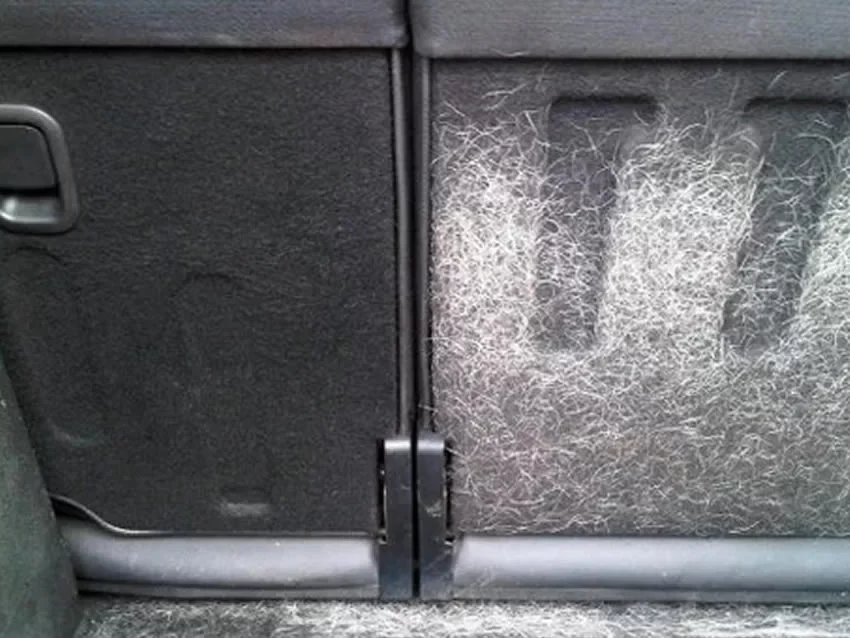
The result is hair that resists normal vacuuming, reappears after cleaning, and works deeper into the material over time as passengers sit and move. In cargo areas, hair can mat itself into liner fabric so thoroughly it looks almost woven in. In rear seats and seatback creases, it accumulates in seams that a standard vacuum nozzle can't reach.
Static electricity makes it worse. Pet hair that's been in a vehicle for a while builds up a static charge against seat fabric and carpet — actively causing it to cling rather than release. Running a standard vacuum over it can sometimes reinforce that charge rather than break it. This is why professional removal requires a specific sequence of tools, not simply more suction power.
Book Signature Interior Reset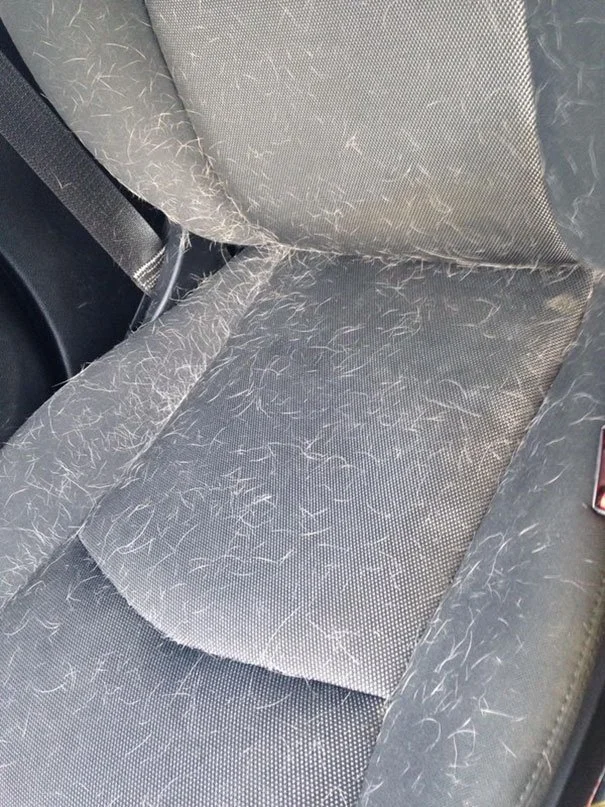
What Professional Pet Hair
Removal Looks Like
The difference between a DIY vacuum pass and a professional pet hair removal process is significant — particularly in vehicles with embedded hair in seat fabric, seams, and cargo liners. The right tools and the right sequence produce results a standard vacuum simply can't match.
Light Pet Hair vs
Heavy Embedded Pet Hair
Not every dog vehicle has the same level of hair accumulation. How the service is handled — and priced — depends on what's actually present when we evaluate the vehicle.
Light Pet Hair — Included in Interior Services
Vehicles with light pet hair accumulation — occasional dog transport, smaller breeds, or interiors cleaned relatively recently — typically have pet hair addressed as part of a standard Signature Interior Reset without additional cost.
At this level, the blowout and vacuum process during the interior service is usually sufficient to achieve a clean result without requiring a dedicated pet hair removal session.
Heavy Pet Hair — Dedicated Add-On Service
Vehicles with heavy, embedded, or long-accumulated pet hair — large breed dogs, multiple dogs, daily transport, or interiors that haven't been properly cleaned in a significant period — require additional time, tools, and a dedicated removal process beyond the standard interior service.
In these cases, pet hair removal is added onto the interior service and priced based on vehicle size and severity of accumulation after evaluation. We assess this when we see the vehicle — no guessing upfront.
How Professional Pet Hair
Removal Actually Works
Effective pet hair removal isn't about one tool — it's about a multi-step process that works with the material rather than against it. Each step addresses a specific part of the problem that the previous step alone can't solve.
Air Blowout
Compressed air dislodges pet hair from seams, seat crevices, seatback gaps, console edges, floor mat borders, and tight interior spaces where hair collects but vacuums can't reach. Blowing out before vacuuming brings embedded hair to the surface where it can actually be captured — rather than leaving it packed into places a nozzle can't access. This step alone reveals significantly more hair than most owners expect.
Rubber Brush Agitation
Rubber brushes are worked through seat fabric, carpet, and cargo liners to pull embedded hair to the surface. Rubber creates friction against pet hair fibers in a way that synthetic brushes don't — drawing the hair up and out of the material rather than pushing it around. This step is particularly important for heavily embedded hair that has been pressed into material over time and resists vacuum suction. The rubber-to-fiber interaction breaks the mechanical grip that traps hair in woven surfaces.
Targeted Vacuum Extraction
Specialized vacuum nozzles designed for pet hair and tight interior spaces extract the loosened hair after agitation. Standard vacuum attachments are too wide and too shallow to work effectively in seat seams, seatback creases, and floor mat borders. The right nozzle geometry makes a significant difference in how completely hair is removed from the areas where it accumulates most heavily — the places where most of the problem actually lives.
Seam & Crevice Detailing
Seat seams, seatback gaps, headrest slots, door panel edges, and console borders receive specific attention because these are the areas where hair collects in the highest concentrations and is most resistant to general cleaning. Addressing these tight areas properly is what separates a thorough pet hair removal from a surface-level result — and what makes the difference between hair that stays gone and hair that reappears within days.
Anti-Static Treatment
After hair has been removed, an anti-static spray is applied to seat fabric and carpet surfaces. This neutralizes the static charge that causes pet hair to cling and embed so aggressively — reducing how quickly hair re-accumulates between cleanings. It doesn't prevent your dog from shedding, but it makes future removal noticeably easier and helps the results of the service last longer before the next professional clean is needed.
Where Pet Hair Accumulates
Most in Vehicle Interiors
Where pet hair hides is often more important than how much there is. Knowing the specific locations where hair concentrates helps explain why a standard vacuum pass rarely gets it all — and why the right tools and sequence matter.
Rear Seat Fabric
Dogs riding in the back seat press hair directly into the seat fabric through movement and body weight. The longer a dog travels in the seat, the more deeply the hair embeds — particularly in cloth and woven fabric interiors that give the hair something to grip.
Seat Seams & Seatback Gaps
The gap between the seat cushion and seatback, along with stitching seams, collects hair in concentrations that are difficult to reach with standard tools. These areas often hold far more hair than the visible seat surface suggests — and are where most DIY vacuum attempts fall short.
Floor Carpets & Mats
Dogs stepping in and out of vehicles deposit hair onto floor carpets with each entry and exit. Hair on the floor is pressed further into the carpet pile every time a passenger steps on it — making it increasingly resistant to vacuuming over time and requiring agitation before extraction.
Cargo Areas & Liners
SUVs and crossovers used for dog transport typically carry the heaviest accumulation in the cargo area. Hair mats into cargo liner fabric and accumulates in the corners and edges where liner meets vehicle structure — often to the point where the liner feels covered rather than just having surface hair.
Door Panel Fabric
Dogs leaning against door panels deposit hair onto fabric inserts and armrests — surfaces often overlooked during DIY cleaning but holding significant accumulation, particularly on the doors most frequently used for entry and exit.
Headrests & Upper Seat Areas
Larger dogs that rest their heads on seatbacks or headrests leave hair on fabric that's harder to reach and easy to miss. Hair at height is also more likely to become airborne and redistribute throughout the cabin during driving — spreading the problem beyond the dog's immediate seating area.
Pet Hair Removal
and Pet Odor
Pet hair carries dander, skin oils, and saliva that contribute directly to pet odor in the vehicle interior. Removing the hair is often one of the most meaningful steps toward improving overall cabin freshness — but it isn't always the complete solution.
If a vehicle has significant embedded pet odor — from biological accidents, long-term accumulation, or heavy dog transport over an extended period — hair removal alone may not fully address the smell. The odor source may have penetrated into carpet padding, seat foam, or cargo liner backing beyond what hair removal treats.
In those situations, odor removal is recommended alongside or following the pet hair removal process. For vehicles with both significant hair accumulation and persistent odor, the most effective approach is usually a Signature Interior Reset as the foundation, followed by dedicated pet hair removal and odor treatment as needed.
Request an EvaluationDog Owners in
Westchester County
Westchester County is one of the most dog-friendly areas in the region — and that shows up directly in vehicle interiors. These are the conditions that make pet hair removal one of our most common service requests.
Active Dog Lifestyles
Dogs in Westchester get used. Trips to Rockefeller State Park, Ward Pound Ridge Reservation, Leatherman Loop, local dog parks, veterinary visits, and grooming appointments add up to significant vehicle time for dogs in communities like Chappaqua, Rye, Bronxville, Larchmont, and Scarsdale.
More time in the vehicle means more hair, more dander, and more opportunity for accumulation to build up in carpet and seat fabric between cleanings. Daily transport dogs are particularly hard on interiors — even short trips add up over months of consistent use.
Book Interior ResetLarger Breeds & SUV Interiors
Westchester families tend to drive SUVs, crossovers, and minivans — vehicles with larger cargo areas and more upholstered surface area that accumulates pet hair more extensively than a sedan. Larger dog breeds that are common in the area also shed more volume and deposit hair more aggressively during travel.
Combined with the cargo area use typical of active outdoor lifestyles, these vehicles often need more dedicated pet hair attention than owners expect — particularly when hair has been accumulating for months without a thorough professional clean.
Request an EvaluationFrequently Asked About
Pet Hair Removal
Your Dog Rides With You.
We'll Handle What That Leaves Behind.
Pet hair is one of the most common interior issues we deal with in Westchester and Fairfield County vehicles — and one of the most satisfying to resolve. The right tools and the right process make a significant difference in what's actually achievable. Whether you need light hair addressed as part of a broader interior service or a dedicated removal session for a heavily affected vehicle, we'll evaluate the situation and give you a straightforward plan. Serving New Rochelle, Scarsdale, Pelham, Rye, Bronxville, Larchmont, Mamaroneck, Chappaqua, Port Chester, Rye Brook, Greenwich, Stamford, and throughout Westchester County and Fairfield County.