

Paint
Correction
Restore clarity to your paint without removing more than necessary — single-stage machine polishing that addresses swirl marks, light scratches, and oxidation with the restraint your clear coat deserves.
Available as an add-on to the Signature Exterior Reset or Signature Full Reset. As part of our full car detailing service, serving New Rochelle, Scarsdale, Bronxville, Pelham, Rye, Greenwich, Stamford, and throughout Westchester County and Fairfield County.
What Paint Correction
Actually Is
Paint correction is the process of using a machine polisher and professional-grade compounds or polishes to reduce the appearance of surface imperfections in your vehicle's clear coat. It is not a polish you can buy at an auto parts store — and it is not the same as a detail.
Swirl marks, light scratches, water spot etching, and general dullness are all forms of surface-level damage that accumulate over time from washing, driving, and environmental exposure. Paint correction removes a thin, microscopic layer of clear coat to level out those imperfections and restore a cleaner, more reflective finish.
The result is paint that looks noticeably clearer and more glossy — not because anything was added, but because the surface is more uniform and better able to reflect light. What paint correction cannot do is repair deep scratches that have broken through the clear coat into the base coat or primer, remove dents, or address physical damage. Those require bodywork, not detailing.
Book Detail + Correction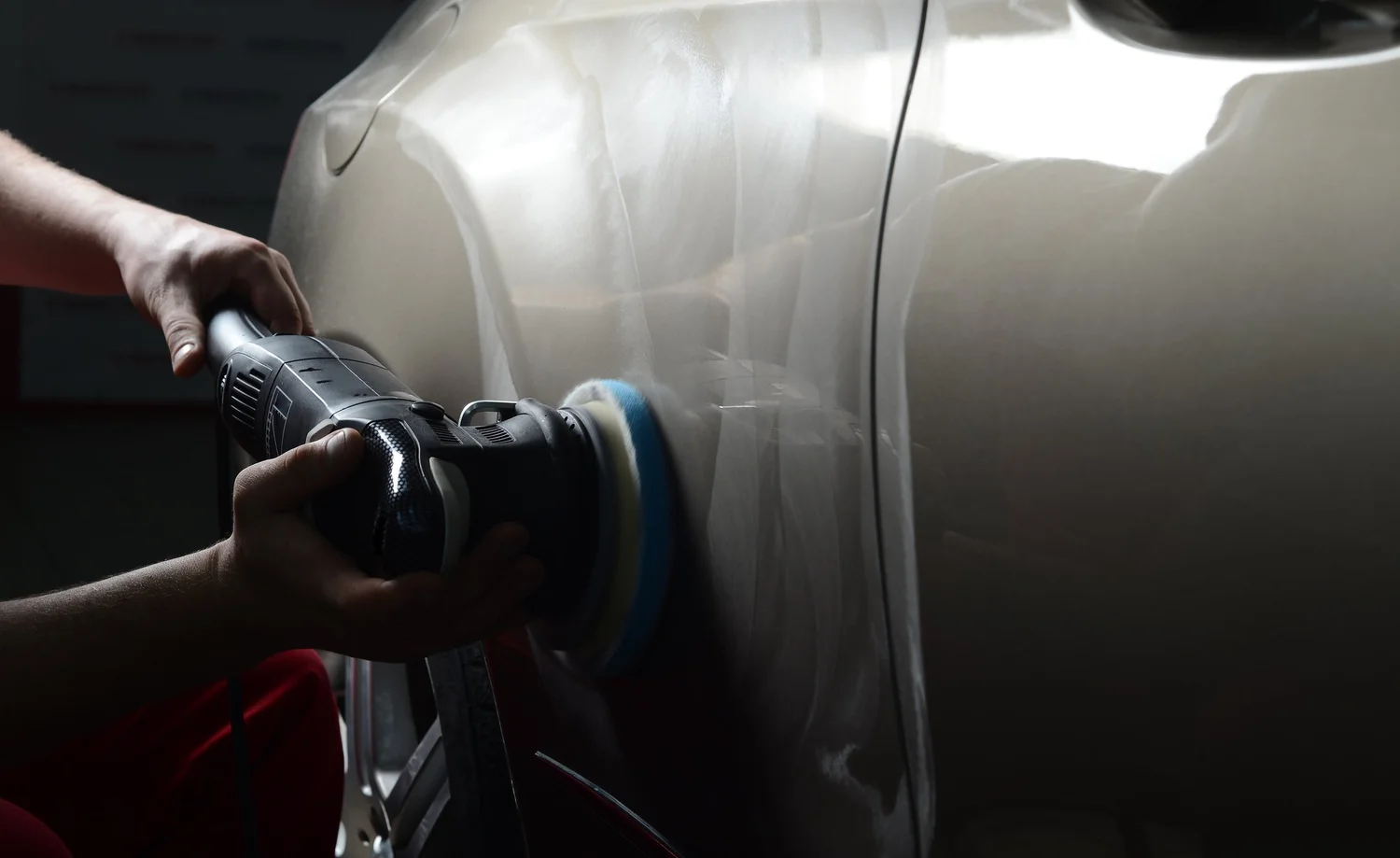
What Paint Correction
Looks Like
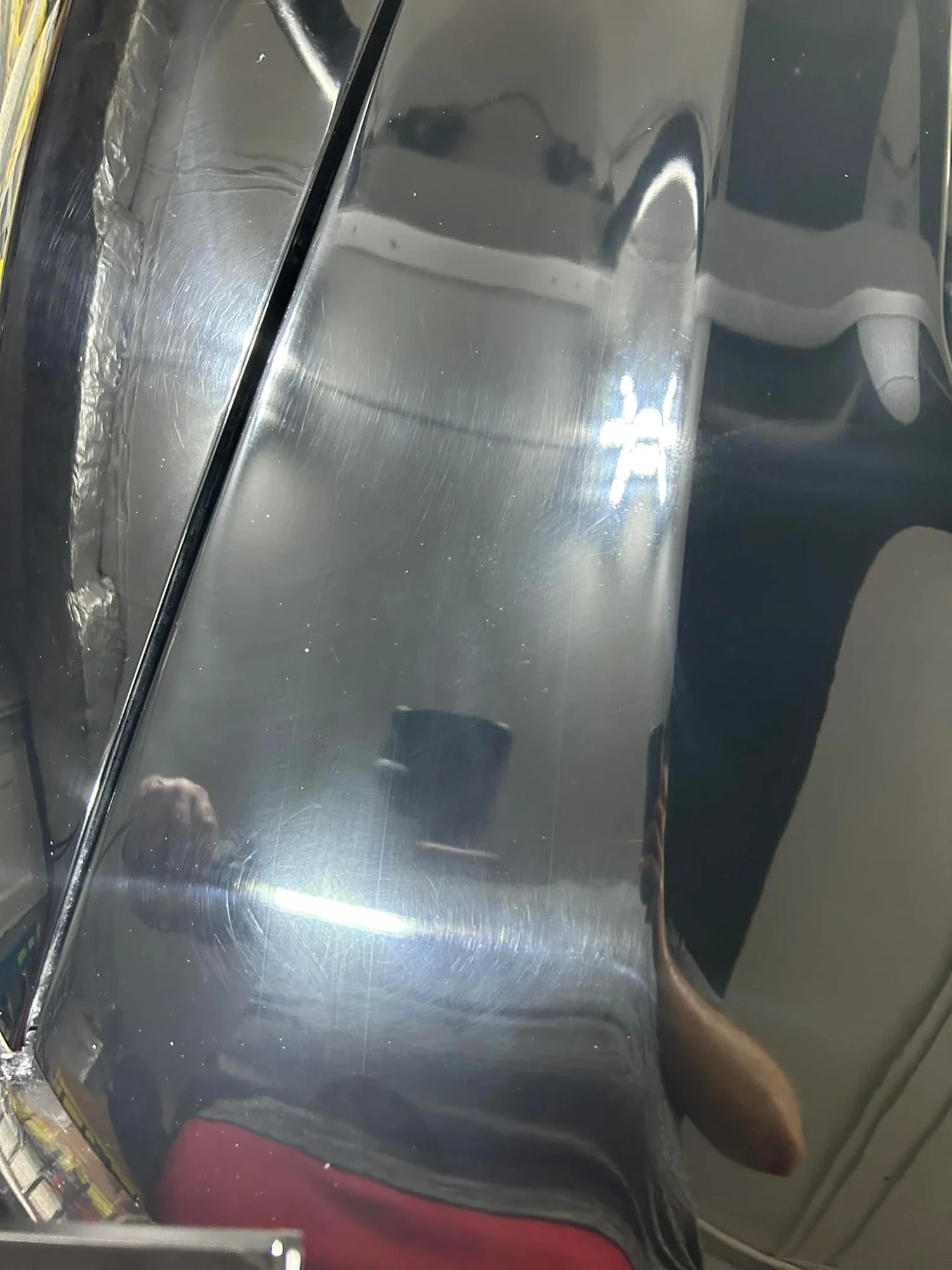
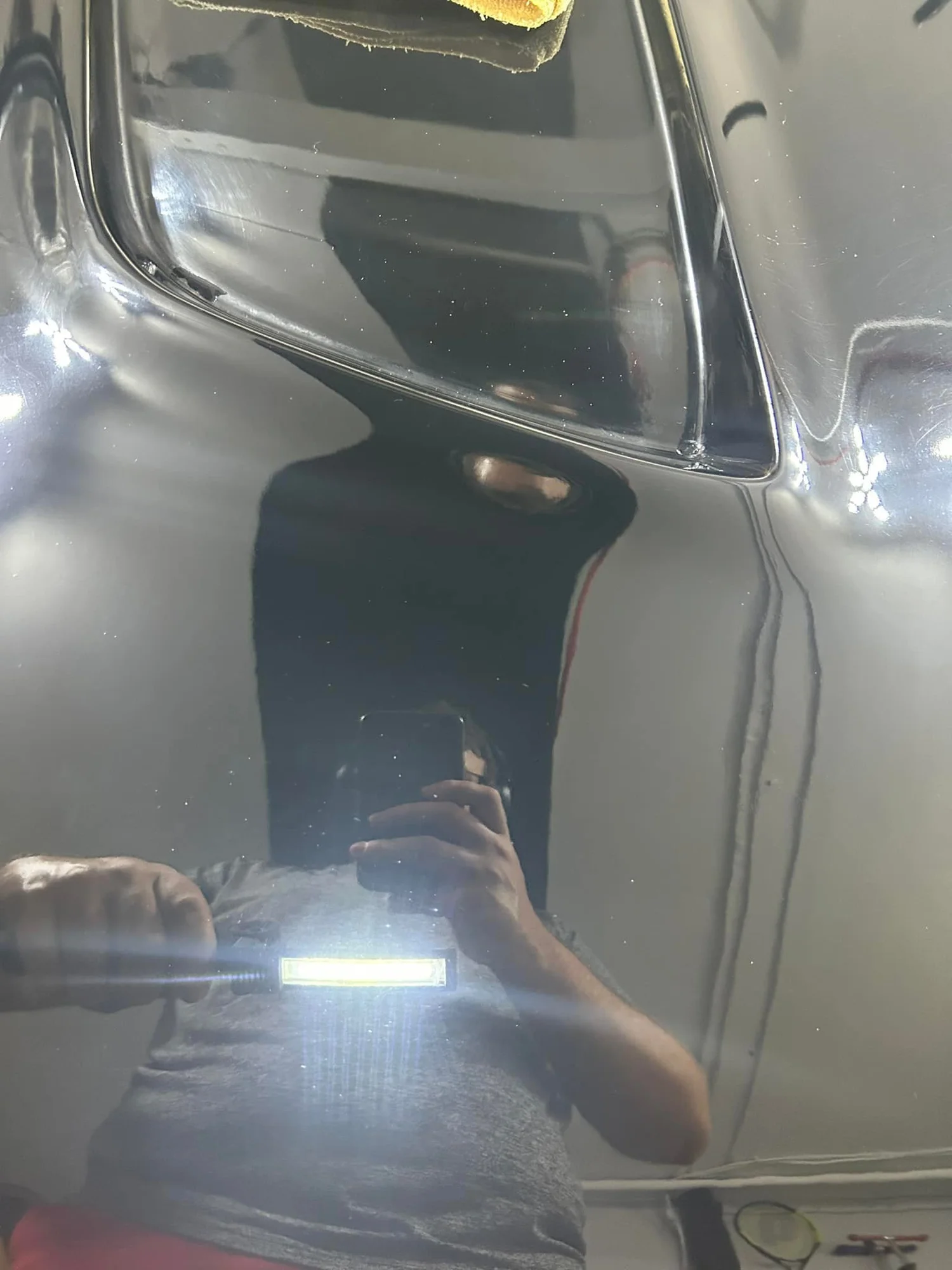
A single-stage machine polish addresses the surface-level defects most daily drivers actually deal with — swirl marks, light scratches, and oxidation that accumulate over years of normal use and washing. The improvement in clarity and gloss is visible in any lighting condition.
Polishing Makes Paint Look Better —
But It Also Removes Material
Every time you polish a vehicle, you are removing a very thin layer of clear coat. That's how the process works. Understanding this is the difference between a correction that helps your car and one that quietly shortens its life.
Clear Coats Are Thin
Modern factory clear coats are significantly thinner than they were decades ago — typically between 2 and 4 mils. That doesn't leave much room for repeated aggressive polishing over the life of a vehicle.
Removing more material than necessary to achieve a result means less protection left on the paint going forward. A shop that leads with "full paint correction" for every vehicle isn't taking that reality seriously.
Less Is More
For the vast majority of daily drivers in Westchester County, a single-stage polish is all that's warranted. It addresses most swirl marks and light defects while removing the minimum amount of clear coat necessary to achieve a great result.
Multi-stage correction — two or more passes with progressively finer compounds — is reserved for show cars or vehicles with severe, deep defects that genuinely require that level of work. Most vehicles simply don't need it. Our job is to protect your investment, not chase perfection at the expense of your paint's long-term health.
What a Single-Stage Polish
Can Improve
Single-stage machine polishing is effective for a wide range of common paint defects found on everyday vehicles throughout Westchester County. One well-executed pass handles most of what daily drivers actually deal with.
Swirl Marks
The most common paint defect on daily drivers. Swirl marks are fine circular scratches caused by improper washing, automatic car washes, and dry wiping. They're most visible in direct sunlight and give paint a dull, spiderweb-like appearance that correction directly addresses.
Light Surface Scratches
Fine scratches in the clear coat from light contact, key rubs, or parking lot abrasion can often be reduced or eliminated with a single-stage correction, depending on their depth. Scratches you can feel with your fingernail have penetrated too deeply for polishing to fully address.
Water Spot Etching
Hard water and mineral deposits can etch into the clear coat surface over time. Machine polishing can reduce or remove this etching when it hasn't penetrated too deeply — a common issue on Westchester vehicles exposed to sprinklers and hard tap water.
Oxidation & Dullness
UV exposure and environmental fallout cause clear coat to oxidize and lose its reflective quality. Polishing removes the degraded surface layer and restores a cleaner, clearer finish — one of the most noticeable transformations on vehicles that have been parked outdoors for years.
Reduced Gloss
Paint that looks flat or hazy — even after washing — often has surface-level contamination or micro-scratches affecting how it reflects light. Correction restores depth and gloss to the finish in a way that washing and decontamination alone cannot achieve.
Faded Appearance
Vehicles that have been exposed to Westchester's full four seasons without protection often show early signs of paint fading. Correction can significantly improve the appearance before a ceramic coating or sealant is applied — giving the protection a better surface to bond to.
Why Decontamination Has
to Come First
Paint correction is only available as an add-on to the Signature Exterior Reset or Signature Full Reset — and there's a direct reason for that. Before a machine polisher touches your paint, the surface needs to be completely clean and decontaminated.
That means removing not just visible dirt, but bonded contamination: iron fallout, industrial particles, road tar, and embedded debris that a standard wash won't touch. Attempting to polish over contaminated paint doesn't just reduce the quality of the result — it can drag particles across the surface and introduce new scratches in the process.
The Signature Exterior Reset includes a thorough multi-step decontamination that properly prepares the paint for correction. By combining both services, you're not adding an unnecessary step — you're doing it the right way.
If you're also considering a ceramic coating, correction before application is often the right move. A coating locks in whatever the surface looks like at installation — so correcting first means sealing in a cleaner, more reflective finish. Learn more about our paint decontamination process or the Signature Exterior Reset.
Book Detail + CorrectionPaint Correction
Pricing
Paint correction is priced as an add-on to the Signature Exterior Reset or Signature Full Reset. The add-on price varies by vehicle size and is in addition to the base service price.
When Paint Correction
Is Worth It
Not every vehicle needs paint correction. Here's a look at the situations where it delivers the most value for Westchester County drivers.
Before a Ceramic Coating
Ceramic coatings lock in the surface beneath them. If swirl marks and surface defects are present at installation, they'll be sealed in permanently. Correcting first means the coating is protecting a cleaner, clearer finish — and the long-term result is meaningfully better.
Vehicles You're Keeping Long-Term
If you're planning to hold onto your car for several more years, restoring the paint now — and following up with protection — is a practical way to preserve its condition and resale value. The correction is permanent; maintaining the result is what requires ongoing care.
Cars Being Passed Down
A vehicle that's been in the family for years often has a paint surface that reflects it. Correction can significantly improve appearance before the car is handed off — often one of the most impactful services you can do before a transfer.
Paint Dulled by Automatic Car Washes
Automatic car washes are one of the leading causes of swirl marks on daily drivers. Vehicles that have relied on tunnel washes for years typically show it in their paint — and often benefit significantly from a single-stage correction to clear it up.
After Years of No Protection
Paint that has gone years without wax, sealant, or coating typically shows visible oxidation, fading, and surface damage. Correction before applying protection gives you a much better foundation — and a much better result from whatever you apply afterward.
Vehicles Parked Outdoors Year-Round
Westchester's four seasons are not easy on paint. UV exposure, road salt, pollen, and temperature swings take a cumulative toll. Correction addresses that accumulation before it progresses further — and before protection is applied over a compromised surface.
What Paint Correction
Cannot Fix
Paint correction is a powerful process, but it has real limits — and understanding those limits upfront is part of how we do business. Setting honest expectations before we start is more important to us than overselling the service.
What Polish Cannot Address
Deep scratches that have broken through the clear coat and into the base coat or primer cannot be corrected through polishing. You'll typically be able to feel these scratches with your fingernail. Addressing them requires touch-up paint or bodywork.
Dents, chips, paint transfer from contact, and physical damage to body panels are also outside the scope of detailing. No amount of polishing will remove a dent or fill a rock chip.
Severe clear coat failure — peeling, flaking, or delamination — is also beyond what correction can address. Once the clear coat has failed structurally, polishing is not an appropriate solution.
Our Honest Assessment
For most daily drivers in Westchester County, the defects that genuinely respond to single-stage correction are swirl marks, light scratches, water spot etching, and oxidation. If your vehicle has those, the results can be significant.
If it has damage beyond that — deep scratches, clear coat failure, or bodywork needs — we'll tell you before we start. We'd rather be honest about what correction can and can't do than let you spend money on a service that won't fully address your vehicle's condition.
Book an Evaluation →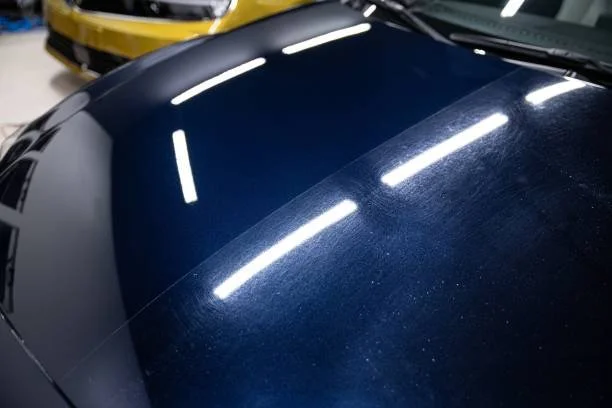
Frequently Asked About
Paint Correction
Paint That Looks Better —
Without Removing More Than It Should
Paint correction done right isn't about chasing a perfect finish at any cost. It's about improving what can be improved, protecting what's left, and being honest about the difference. Whether you're preparing for a ceramic coating, restoring a long-neglected finish, or simply want your paint to look the way it used to — a single-stage correction added to your Signature Exterior Reset is a straightforward way to get there. Serving New Rochelle, Scarsdale, Bronxville, Pelham, Rye, Larchmont, Mamaroneck, Chappaqua, Port Chester, Rye Brook, Greenwich, Stamford, and throughout Westchester County and Fairfield County.