

What Is Paint
Decontamination?
Your car can look clean and still have a layer of bonded contamination that washing can't touch. Here's what that means, where it comes from, and why removing it matters before any protection goes on.
Decontamination is the step that makes everything else work properly — correction, coating, sealant. Skip it and you're applying protection to a surface that can't hold it.
Your Paint Looks Clean.
It Probably Isn't.
Run your hand across your vehicle's paint after a fresh wash — even a thorough one. If the surface feels slightly rough or gritty rather than perfectly smooth, that texture isn't leftover dirt. It's bonded contamination embedded in the clear coat surface that regular washing simply isn't designed to remove.
This affects nearly every car driven regularly in Westchester County. The contamination isn't visible most of the time. It doesn't make the car look obviously dirty. But it's there — sitting in and on the clear coat, gradually affecting the surface, and undermining the performance of any protection product applied on top of it.
Paint decontamination is the process of removing this bonded contamination — not the loose surface dirt that washing handles, but the particles that have embedded themselves into the paint surface and can only be removed through specific chemical or mechanical processes.
Washing removes what's on the paint. Decontamination removes what's in it. Both are necessary — they're just solving different problems.
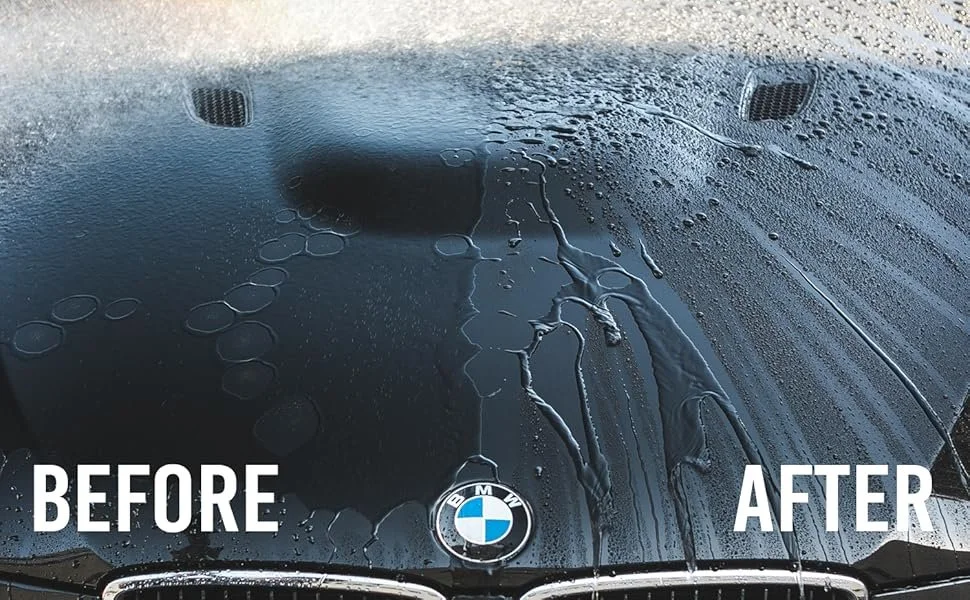
What Bonded Contamination
Actually Is
Bonded contamination isn't a single substance — it's a collection of different particles and residues that accumulate on paint through normal driving and environmental exposure. Each type bonds to the clear coat differently and requires different approaches to remove.
Iron Fallout & Brake Dust
Every time brakes are applied, brake pads and rotors shed tiny metallic particles that travel through the air and land on every surface of the vehicle — not just the wheels. When these iron particles land on warm paint, they embed into the clear coat and begin to oxidize, creating microscopic rust spots.
On white or silver paint in direct sunlight, this shows as tiny orange or reddish-brown speckling. Left long enough, this oxidation can etch into the clear coat. This is the most common and most damaging form of bonded contamination on everyday vehicles.
Industrial & Rail Fallout
Vehicles near rail lines accumulate metallic particles from wheel-on-rail contact — rail dust — which is a particularly aggressive form of iron contamination. Westchester County has significant Metro-North infrastructure, and vehicles parked near stations in New Rochelle, Larchmont, Mamaroneck, and Scarsdale accumulate rail fallout at an accelerated rate.
This isn't a minor factor. Rail fallout particles are particularly fine and embed deeply into clear coat surfaces, making them more difficult to remove and more damaging the longer they remain.
Road Tar & Bitumen
Hot asphalt and road tar spray up from the road surface and bond to lower paint panels, rocker panels, and the rear of the vehicle. In summer, freshly laid road surfaces throughout Westchester County produce significantly more tar spray than in cooler months.
Tar bonds to paint on contact and hardens as it cools. It cannot be removed by washing and requires specific solvent-based products to dissolve before it can be safely wiped away without damaging the paint underneath.
Tree Sap Residue
Tree sap that lands on paint and is partially removed — but not fully cleaned — leaves behind a sticky, transparent residue that bonds to the clear coat. This is particularly common after incomplete cleaning attempts where the bulk of the sap was wiped away but the adhesive residue wasn't fully dissolved.
In Westchester County's heavily tree-lined communities — Scarsdale, Bronxville, Chappaqua, Rye — sap exposure is a consistent seasonal reality from spring through fall that compounds with each incomplete removal.
Mineral Deposits & Water Spots
Hard water that evaporates from paint leaves behind calcium and magnesium deposits. In areas with hard water — which describes much of Westchester County — these deposits accumulate through rain events, sprinkler systems, and road spray. Over time they etch into the clear coat surface, particularly when exposed to heat.
Mild deposits can often be removed through chemical decontamination. Severe etching that has penetrated deeper may require mechanical correction to fully address.
Industrial & Environmental Fallout
Beyond brake dust and rail particles, vehicles accumulate a range of airborne industrial particles — pollution, exhaust particulates, construction dust, and environmental debris — that settle on paint and gradually bond over time.
Vehicles commuting daily on I-95, the Hutchinson River Parkway, the Bronx River Parkway, or the Cross County Parkway are exposed to higher concentrations of this type of contamination than vehicles driven in less trafficked environments.
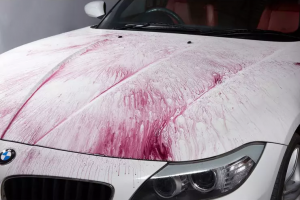
Why Regular Washing Doesn't Remove
Bonded Contamination
A car wash — whether automated or hand wash — uses water, soap, and physical agitation to remove loose surface contamination. Dirt, dust, pollen, and road film that are sitting on top of the paint come off readily because they're not bonded to the surface. They're just resting on it.
Bonded contamination is different. Iron particles from brake dust embed into the clear coat and oxidize, chemically bonding to the surface. Tar is adhesive and hardened. Mineral deposits are crystalline structures that have formed in the microscopic texture of the clear coat. Tree sap residue is sticky and polymer-based.
Soap and water have no chemical mechanism to break these bonds. No matter how thoroughly you wash or how good your shampoo is — bonded contamination requires either a chemical process specifically designed to react with that type of contamination, or mechanical removal through a clay bar that physically pulls particles from the surface. This is also why the sandpaper feeling on a freshly washed vehicle doesn't go away no matter how many times you wash it.
Book Signature Exterior ResetChemical Decontamination vs
Mechanical Decontamination
Professional paint decontamination uses two complementary approaches — chemical and mechanical — each targeting different types of bonded contamination. Most thorough decontamination services use both in sequence for genuinely clean, smooth paint.
Chemical Decontamination
Chemical decontamination uses specialized products that react with specific contaminant types to break their bond with the paint surface. Iron remover — the most important chemical decontamination product — contains active ingredients that chemically react with iron particles embedded in the clear coat, dissolving the oxidation and turning the product purple as it reacts. This reaction breaks the iron particle's bond with the paint, allowing it to be safely rinsed away without physical contact.
Tar and adhesive removers use solvent-based chemistry to dissolve road tar, adhesive residue, tree sap, and similar bonded substances without damaging the clear coat. These are applied to affected areas, allowed to dwell briefly, and safely wiped away.
Chemical decontamination addresses what can be dissolved or chemically reacted away — primarily iron contamination, tar, and adhesive residues. It's the first step in a thorough decontamination process, and it removes contamination that mechanical methods alone couldn't address safely.
Mechanical Decontamination
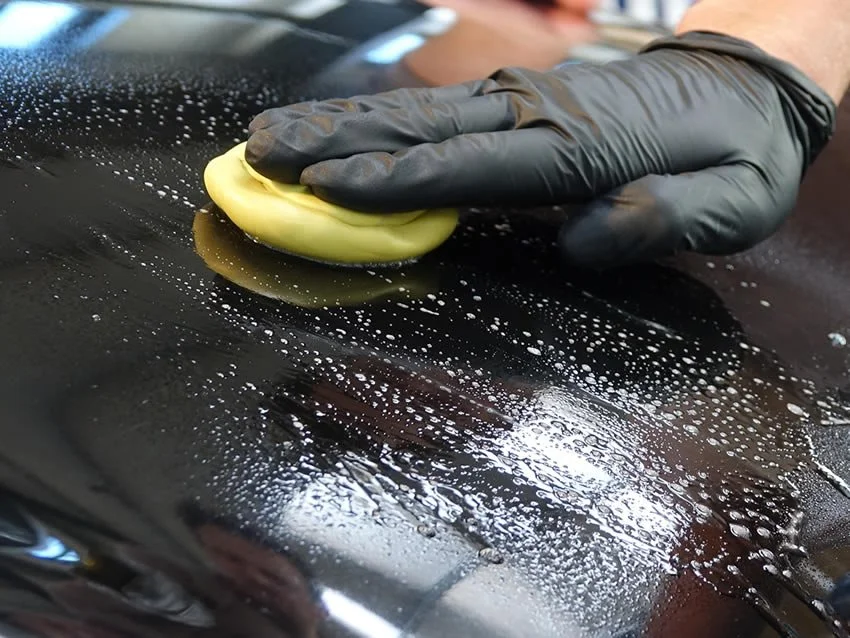
After chemical decontamination, a clay bar or clay mitt is used to physically pull remaining bonded particles from the paint surface. This step removes contamination that chemical products alone can't fully address — the particles that didn't react to chemistry but are still embedded in the clear coat surface.
Clay decontamination works through physical adhesion — the clay material is designed to grab and lift particles from the paint surface as it's worked across it with a lubricant. The result is a surface that is not only chemically clean but physically smooth. The difference is tactile as much as visual: paint that felt slightly rough or gritty after washing feels genuinely smooth after claying, because the particles that created that texture have been physically removed rather than just washed over.
This smooth, truly clean surface is the foundation that paint correction and protective coatings require. You cannot get the same bonding, performance, or longevity from a coating applied to a contaminated surface — which is why this step is non-negotiable.
Why Decontamination Must Happen
Before Protection or Correction
Paint decontamination isn't just a nice-to-have step in the detailing process. It's a required one — and understanding why helps explain why reputable detailers won't skip it regardless of what comes next.
A ceramic coating bonds to the surface it's applied to — and that surface needs to be clean at the molecular level for the coating to adhere properly, perform as designed, and last as long as it's rated to. Applying a coating over contaminated paint means the coating bonds to the contamination rather than the clear coat itself. Iron particles embedded in the paint will continue oxidizing underneath the coating. The investment in ceramic coating is largely wasted if the surface underneath wasn't properly decontaminated first. This is why decontamination is a non-negotiable step in any professional ceramic coating installation. Learn about ceramic coating services.
Attempting to polish contaminated paint is one of the more damaging mistakes in the detailing process. When a machine polisher moves across paint that still has embedded particles, those particles get caught between the pad and the paint surface and dragged across the clear coat at speed. The result is new scratches introduced during the very process meant to remove them. This is why paint correction at Tedrow's Mobile Detailing is only available as an add-on to the Signature Exterior Reset — a service that includes proper decontamination as part of its process. Correction without preparation isn't just less effective. In some cases it actively makes the paint worse.
Even for shorter-term protection products like wax or synthetic sealants, decontamination improves both the application result and the durability of the product. A wax applied over contaminated paint fills in around the particles rather than bonding cleanly to the clear coat — which affects how evenly it applies, how it looks, and how long it holds. Decontamination is the step that makes everything else work properly. Skip it and you're applying protection to a surface that can't hold it.
Decontamination is the step that makes everything else work properly. Skip it and you're applying protection to a surface that can't hold it — or correcting paint in a way that risks making it worse.
The Tactile Difference
After Clay Treatment
The most immediate evidence of decontamination isn't visual — it's tactile. Paint that felt like fine sandpaper through a plastic bag after washing becomes genuinely smooth after clay decontamination. That physical difference confirms the contamination has been removed, not just cleaned over.
This smooth, truly clean surface is what paint correction polishing pads and ceramic coating chemistry require to do their jobs properly. It's not a step that can be replicated by more aggressive washing, better shampoo, or skipping straight to the protection application. The sequence matters, and decontamination is an irreplaceable part of it.
Book Signature Exterior Reset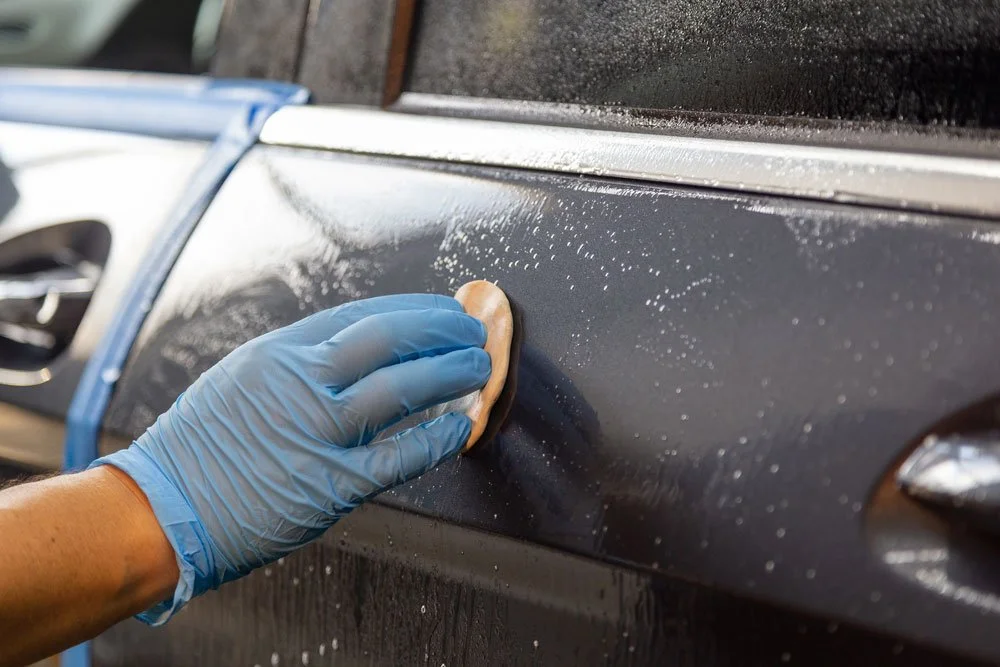
Why Paint Contamination Is
Particularly Heavy Here
All vehicles accumulate bonded contamination over time — but the rate varies significantly based on driving environment, road conditions, and local infrastructure. Westchester County vehicles tend to accumulate contamination faster than vehicles in less dense driving environments for several specific reasons.
Heavy Commuter Rail Infrastructure
Westchester County is served by Metro-North Railroad with stations throughout the county. Rail operations shed metallic particles continuously from wheel-on-rail contact, and vehicles parked near stations or driving in corridors adjacent to rail lines accumulate rail fallout at an accelerated rate. Vehicles that commute by train and are parked at Metro-North stations regularly may need decontamination more frequently than vehicles with no rail exposure.
High-Traffic Parkways & Highways
Daily commuters on I-95, the Hutchinson River Parkway, the Bronx River Parkway, and the Cross County Parkway drive in concentrated traffic where brake dust accumulation is significantly higher than on lighter roads. Every vehicle braking ahead of you contributes to the iron particle concentration in the air your vehicle moves through. Vehicles spending an hour or more daily in heavy parkway traffic accumulate brake dust contamination measurably faster.
Four Full Seasons of Exposure
Westchester County's full seasonal range means vehicles are exposed to different contamination types throughout the year — spring pollen and sap, summer road tar and industrial fallout, fall organic debris, and winter road salt and brine. Each season adds different types of bonded contamination, each responding to different decontamination chemistry. A vehicle driven year-round in Westchester benefits significantly from twice-yearly professional decontamination.
Tree-Lined Communities
The heavily wooded character of communities throughout Westchester — Scarsdale, Bronxville, Chappaqua, Rye, Larchmont — produces consistent sap, pollen, and organic fallout that contribute to surface contamination throughout spring, summer, and fall. Vehicles parked under tree canopies accumulate this type of contamination faster than vehicles in more open environments.
When Your Paint Needs
Decontamination
Most vehicles driven regularly and not professionally decontaminated within the past year need it. Here's the simple at-home test: after washing and drying, put your hand inside a clean plastic bag and run it lightly across a flat paint panel. If the surface feels smooth and the bag glides easily, the paint is relatively clean. If you feel roughness or grittiness — like very fine sandpaper — you're feeling bonded contamination. The rougher it feels, the heavier the contamination load.
Spring
The best time to remove winter's accumulated salt, brine, road grime, and iron fallout before it continues affecting the paint — and before spring sap and pollen season adds new contamination layers. Spring is the most important decontamination window of the year for Westchester County vehicles.
Fall
Removing summer's accumulated tar, sap residue, bug deposits, and industrial fallout before winter. This is also the most important time to ensure the paint surface is clean for protective coating application before salt season begins — entering winter with protected, decontaminated paint makes a significant difference.
Before Any Protection
Any time a ceramic coating, sealant, or wax is being applied — regardless of season. Decontamination is a required preparation step before any protection product, not an optional enhancement. No exceptions.
Paint Decontamination —
Frequently Asked
Start With Paint That's
Actually Clean
Tedrow's Mobile Detailing serves vehicle owners throughout Westchester County — New Rochelle, Scarsdale, Pelham, Bronxville, Rye, Mamaroneck, Larchmont, Chappaqua, Port Chester, and Rye Brook. We come to you, assess what the paint actually needs, and do the preparation work that makes everything else perform the way it should.