

Windshield &
Glass Coating
Improve visibility, reduce water buildup, and make automotive glass easier to maintain — through all four seasons of Westchester driving.
From spring pollen and summer thunderstorms to fall debris and winter road spray, professionally coated glass changes how water behaves on the surface and simplifies routine maintenance throughout the year.
Why Glass Protection
Matters
Most vehicle owners think about protecting their paint, wheels, or interior surfaces. Few think about protecting the glass — despite the fact that your windshield is one of the most important safety components on your vehicle.
Every day, automotive glass is exposed to road film, mineral deposits, hard water, pollen, bug residue, tree sap mist, salt spray, and countless other contaminants that gradually reduce visibility and make routine maintenance more difficult.
Whether you're commuting down I-95 through New Rochelle, navigating the Hutchinson River Parkway during a summer thunderstorm, or driving through winter road spray in Scarsdale, the condition of your windshield directly affects your driving experience. As part of our full car detailing service, professional glass coating is designed to improve how water behaves on the surface while helping reduce contamination buildup and simplifying routine maintenance throughout the year.
Book Glass Coating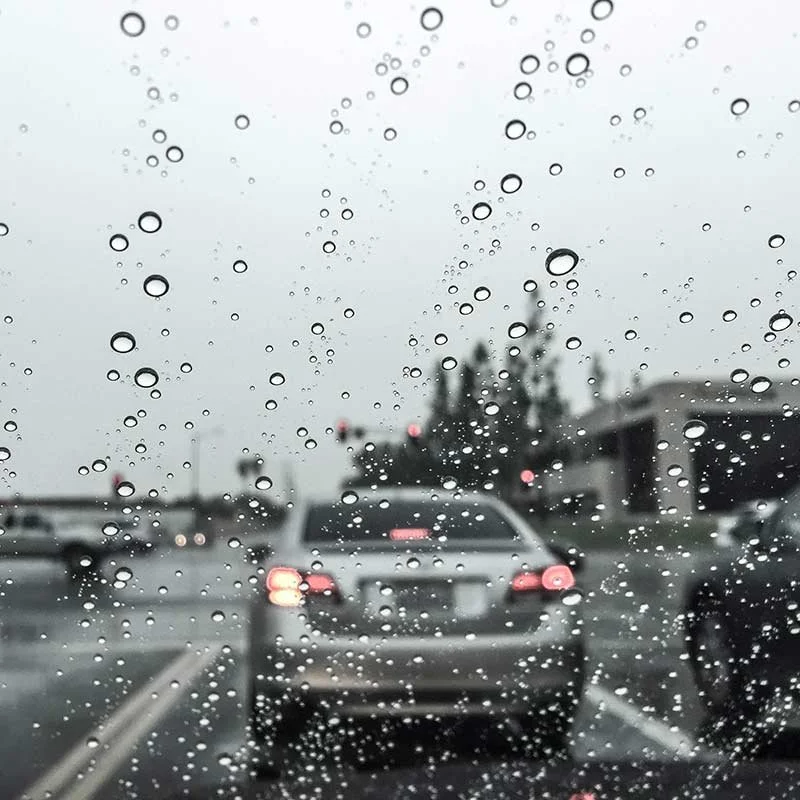
Clean Glass Matters More
Than Most Drivers Realize
Even vehicles that appear clean often have a layer of bonded contamination that remains after normal washing. This contamination affects visibility in ways that are easy to overlook until conditions get bad.
Windshield Glare
Road film, mineral deposits, and surface contamination increase glare from headlights, streetlights, and low-angle sunlight — making night and dawn driving measurably harder than it should be.
Rain Smearing
When glass is contaminated, rain may smear across the surface instead of clearing cleanly with the wipers — forcing you to work harder just to see clearly in conditions that should be manageable.
Water Spotting
Hard water and mineral deposits leave behind spotting that becomes more difficult to remove over time. Left unaddressed, water spots can etch into the glass surface and become permanent.
Night Visibility
Contaminated glass distorts light and reduces clarity, especially during nighttime storms or wet-weather commuting on Westchester's parkways and highways where oncoming headlights are unavoidable.
Wiper Performance
Many drivers assume their wipers are failing when the issue is actually contamination embedded in the windshield. Even brand-new wipers struggle on a surface that hasn't been properly cleaned and prepared.
Routine Maintenance
Properly maintained and protected glass is significantly easier to keep clean — contamination releases more readily, mineral deposits don't bond as aggressively, and the glass stays clearer longer between services.
What the Difference
Actually Looks Like
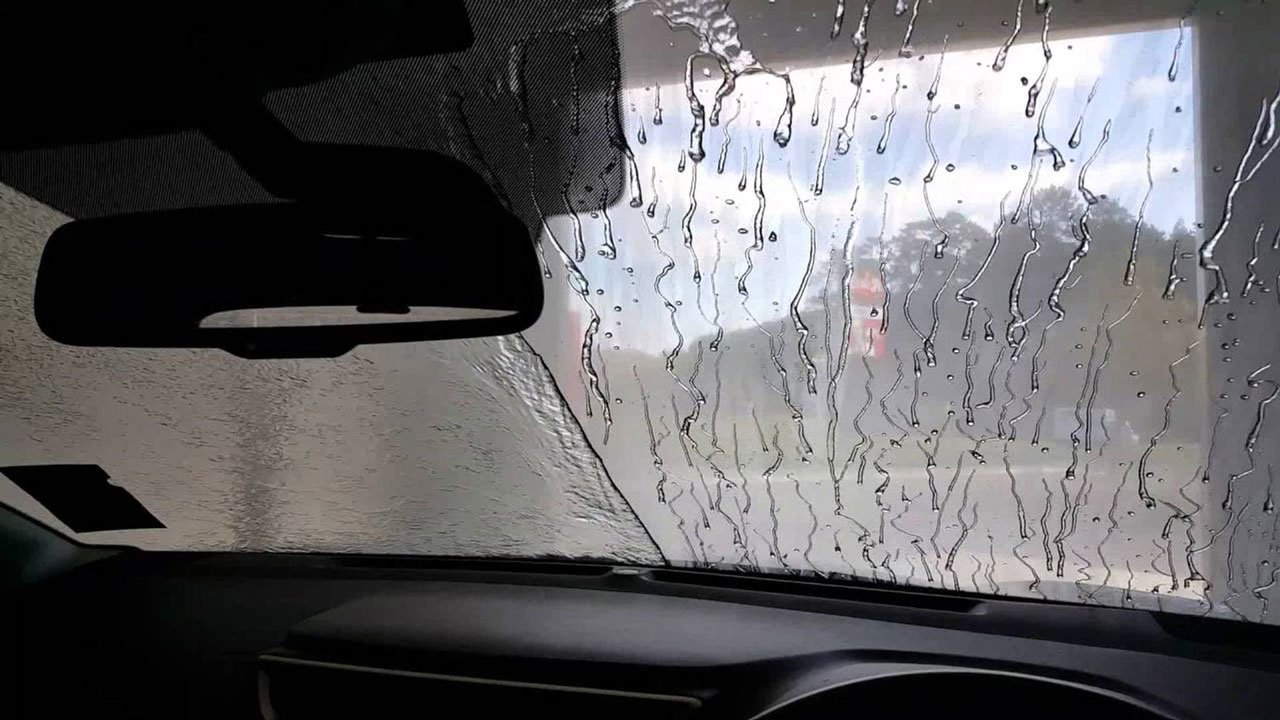
The difference between coated and uncoated glass is most visible during rain. Uncoated glass allows water to sheet across the surface. Coated glass causes water to form tight beads that roll off with airflow — reducing how much water sits on the windshield at any given moment.
What Is a Windshield
or Glass Coating?
A windshield coating is a specialized protective treatment designed specifically for automotive glass. Once applied, the coating creates a highly hydrophobic surface that encourages water to bead and move more efficiently across the glass.
Unlike traditional cleaning products that temporarily improve appearance, a professional glass coating is intended to provide longer-lasting performance and protection. Benefits may include improved water repellency, easier glass cleaning, reduced contamination bonding, better wet-weather visibility, and improved driving comfort during rain.
One important point: a glass coating is not a replacement for properly functioning windshield wipers. Rather, it helps create conditions where water can evacuate more effectively — allowing the wipers to perform their job more efficiently. The two systems work together, not independently.
How a Glass Coating
Changes the Surface
The changes a glass coating creates aren't cosmetic — they're functional. Here's what actually improves once the coating has been properly applied to prepared glass.
Faster Water Evacuation
Instead of spreading across the surface, water forms tighter beads that are more likely to roll away with airflow and vehicle movement — reducing the amount of water sitting on the glass at any moment.
Easier Maintenance
Routine cleaning becomes more efficient because contamination is less likely to bond aggressively to the glass. What used to require significant effort comes off more readily during regular washes.
Reduced Surface Buildup
Road film, dirt, and environmental fallout can be easier to remove during maintenance washes — meaning the glass stays clearer for longer between professional services.
Improved Driving Comfort
Many drivers notice less visual fatigue during poor weather conditions because water is not lingering on the windshield to the same degree — reducing the mental load of wet-weather commuting.
Better Rain Behavior
During wet weather, coated glass helps water move more efficiently instead of allowing it to sit across the windshield — making wipers more effective at clearing the glass with each pass.
Clearer Maintenance Results
Glass that is properly cleaned, decontaminated, and protected is easier to keep clear between professional detailing services — so the results of each service last longer.
Why Drivers Notice the
Biggest Difference During Rain
Most drivers don't think much about their windshield until they're caught in poor weather. During light rain, visibility issues are often manageable. During heavy rain, highway driving, or nighttime storms, the condition of the glass becomes much more noticeable.
When water remains on the windshield in large sheets, drivers are forced to rely more heavily on their wipers to maintain visibility. This creates additional distractions — especially during rush-hour traffic on I-95, the Hutchinson River Parkway, the Bronx River Parkway, or the Cross County Parkway, where changing weather conditions and road spray from surrounding vehicles are constant factors.
While no coating can eliminate the effects of severe weather, many drivers appreciate the added confidence that comes from maintaining cleaner, more easily managed glass throughout the year.
Book Glass CoatingConsumer Treatments vs
Professional Glass Coatings
Both consumer glass treatments and professional coatings aim to improve water repellency — but they differ significantly in durability, preparation, and long-term performance.
Rain-X & Similar Products
Affordable, easy to apply, and readily available. Consumer glass treatments are effective for short-term performance and are a reasonable option for drivers who want occasional improvement without a professional service.
However, they typically require more frequent reapplication, provide shorter-lasting results, and don't include the glass preparation that allows a professional coating to bond properly and perform at its highest level.
Professional Glass Coating
Professional coatings are installed after thorough glass cleaning, decontamination, and surface preparation — allowing the coating to bond more effectively and perform longer. Benefits include increased durability, stronger hydrophobic behavior, improved resistance to environmental exposure, and longer-lasting performance between applications.
For drivers who want the benefits of glass protection without reapplying every few weeks, the professional option is the clear upgrade.
Book Glass Coating →Why Preparation Is the
Most Important Step
One of the biggest misconceptions about glass coatings is that the product itself is the most important factor. In reality, preparation often determines how well the coating performs — and how long it lasts.
Deep Glass Cleaning
Dirt, oils, residue, and surface grime must be thoroughly removed before a coating can properly bond to the glass. A coating applied over contaminated glass will underperform and have reduced longevity regardless of the product quality.
Glass Decontamination
Bonded contaminants — mineral deposits, road film, and surface buildup — are removed from the glass so the coating can make consistent contact with the surface and bond effectively throughout. This is the step most DIY applications skip, and it's usually why consumer products underperform.
Water Spot & Mineral Removal
Mineral deposits and hard water staining are addressed before protection is applied. Water spots that are left under a coating can become permanent — removing them first ensures the coating is protecting clean, clear glass.
Coating Application
With the glass properly prepared, the coating is carefully applied according to product and surface requirements. Proper preparation is what separates short-term results from long-term performance — and it's the reason a professionally installed coating outperforms a consumer product applied to unprepared glass.
Why Glass Coatings Make
Sense in Westchester County
Westchester County's four-season climate creates real and consistent challenges for automotive glass. Each season introduces a different form of contamination that affects visibility and maintenance.
Spring Pollen
Tree-lined communities like Scarsdale, Bronxville, Chappaqua, and Rye experience heavy pollen accumulation that quickly settles on vehicle surfaces. Combined with frequent spring rain, this contamination creates a film on the glass that significantly reduces visibility and makes routine cleaning more difficult.
Summer Thunderstorms
Summer introduces thunderstorms, bug residue, tree sap mist, and water spotting. Vehicles parked outdoors throughout New Rochelle, Pelham, Mamaroneck, and Larchmont are frequently exposed to sudden rain events and sprinkler systems that leave behind mineral deposits on unprotected glass.
Fall Debris
Leaves, moisture, organic debris, and environmental fallout create additional contamination that clings to glass surfaces in fall. This accumulation is easy to overlook but compounds with each rain event, leaving layers of residue that affect clarity heading into winter.
Winter Road Spray
Winter is often the harshest season for automotive glass. Drivers regularly encounter salt spray, brine solutions, slush, snow, and road grime — all of which reduce visibility quickly and can be more difficult to clear from unprotected glass in cold conditions.
Parkway Driving
Vehicles traveling on I-95, the Hutchinson River Parkway, the Bronx River Parkway, and the Taconic State Parkway accumulate substantial contamination quickly — especially in rain, where road spray from surrounding vehicles creates a constant challenge for unprotected windshields.
Outdoor Parking
Vehicles parked outside year-round face constant exposure to pollen, tree debris, bird droppings, rainwater, minerals, and environmental fallout. Glass coating dramatically reduces how aggressively these contaminants bond, making maintenance significantly easier year-round.
Who Benefits Most
From Glass Coating
Glass protection can benefit nearly any vehicle, but some drivers see the greatest practical value based on how and where they drive.
Daily Commuters
Vehicles that spend hours on Westchester roads every week encounter more contamination and weather exposure than occasionally driven vehicles. The cumulative benefit of easier maintenance and improved visibility adds up quickly for daily drivers.
Highway Drivers
Those who frequently travel on I-95, the Hutchinson River Parkway, the Bronx River Parkway, or the Taconic State Parkway experience the greatest benefit from improved water evacuation during rain — where road spray from surrounding vehicles is a constant factor at speed.
Outdoor-Parked Vehicles
Vehicles parked outside year-round face constant exposure to pollen, tree debris, bird droppings, and environmental fallout. Coated glass significantly reduces how aggressively those contaminants bond — making maintenance far less demanding.
Family Vehicles
Improved visibility helps make daily family driving more comfortable and predictable during changing weather conditions. For parents doing school runs, sports drop-offs, and weekend errands, clearer glass in poor weather is a meaningful quality-of-life improvement.
Year-Round Vehicles
Drivers who experience all four New York seasons often appreciate the easier maintenance and improved visibility that glass protection provides — because every season in Westchester brings a new form of glass contamination to manage.
Ceramic Coating Clients
Many vehicle owners who have paint ceramic coating applied choose to add glass coating at the same time — creating consistent hydrophobic protection across every exterior surface rather than leaving the glass unprotected.
Glass Protection as Part of a
Complete Exterior Care Strategy
Many vehicle owners initially research glass coatings because they're frustrated with poor visibility during rain. Over time, however, they often begin thinking about protection more broadly — because the same environmental factors that affect the glass also affect the paint, trim, wheels, and exterior plastics.
Your Whole Exterior Faces the Same Threats
Throughout Westchester County, vehicles are exposed to pollen, tree sap, bird droppings, road salt, industrial fallout, UV exposure, and seasonal contamination. The same conditions that degrade your windshield visibility are degrading your paint, fading your trim, and corroding your wheels.
A glass coating addresses the glass. Ceramic paint coating addresses the paint. Trim restoration addresses faded plastics. Together, they create a vehicle that is genuinely easier to maintain across every exterior surface.
View Exterior Services →Combined Protection Options
Some drivers choose a windshield coating as a standalone service. Others combine glass protection with ceramic coating for the paint, trim restoration, exterior detailing, or ongoing maintenance plans designed to keep every exterior surface in its best possible condition.
The right approach depends on the vehicle, driving habits, storage conditions, and long-term goals. We can help determine the right combination when we assess the vehicle.
Talk to Us About Your Vehicle →Frequently Asked About
Glass Coating
Protecting the Most
Important View From Your Vehicle
Whether you're dealing with spring pollen in Scarsdale, summer thunderstorms in New Rochelle, fall debris in Rye, or winter road spray throughout Westchester County and Fairfield County — maintaining clean and protected glass makes a noticeable difference in both visibility and driving comfort. A professionally prepared glass coating helps improve water behavior, reduce contamination buildup, and simplify maintenance throughout the year.